
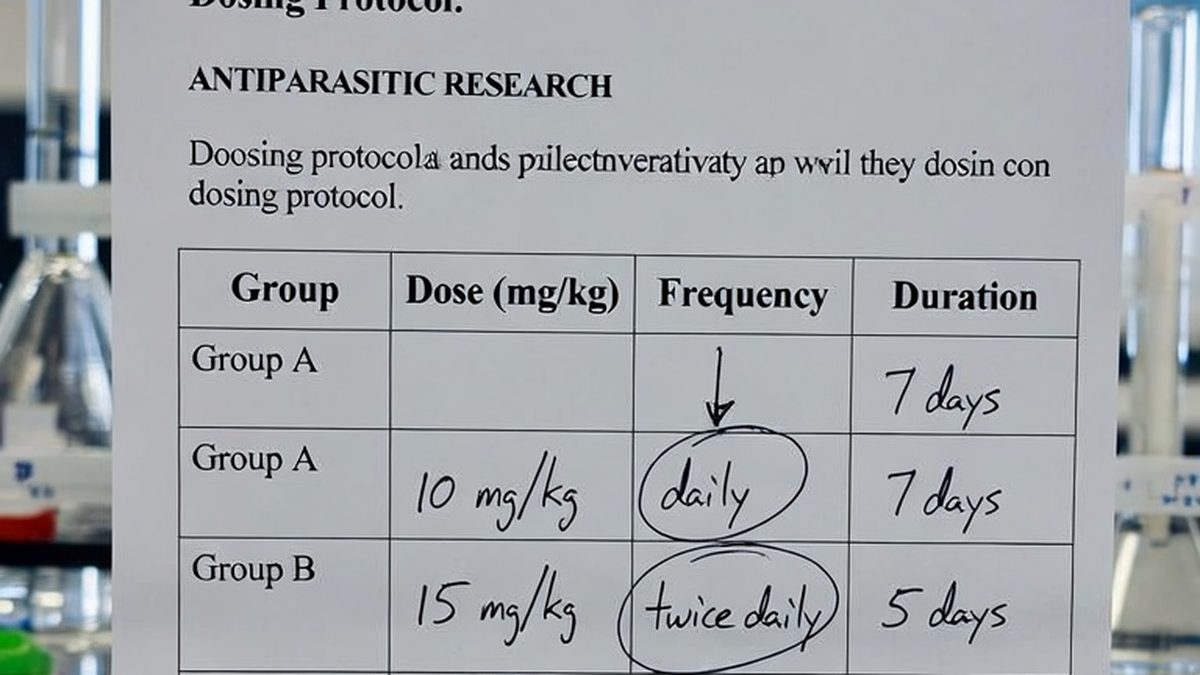
One of the most common requests from readers of the Repurposed Cancer Protocols guide is for clarity on what the published clinical data actually says about dosing. This article synthesises the dosing information that appears in peer-reviewed case reports, phase I clinical trials, and published protocols — presented without interpretation as to appropriateness for any individual. This is an educational summary of what researchers have documented, not medical advice.
Fenbendazole: What Published Case Reports and Studies Document
The most widely cited fenbendazole protocol originates with Joe Tippens, a U.S. patient who reported complete remission from stage IV small-cell lung cancer and subsequently published his protocol. The Tippens protocol — which became the basis for the widely discussed "JoeTippens protocol" — involved:
- Fenbendazole 222 mg/day for three consecutive days, followed by four days off
- Combined with vitamin E succinate, CBD oil, and curcumin
This protocol has been referenced in multiple subsequent case reports. A 2025 PMC case series documented three patients who used fenbendazole in their protocols. The published data from that series noted doses ranging from 222 mg/day to higher doses in some subjects, administered alongside standard or complementary therapies. All three patients achieved either complete or near-complete remission.
The 2024 Anticancer Research review on oral fenbendazole noted that clinical dosing remains unstandardised, and called explicitly for formal clinical trials to establish optimal dosing, therapeutic regimen, and tolerability profiles for human oncological use.
Ivermectin: Preclinical Concentrations vs. Clinical Feasibility
A key paper in the ivermectin literature is a 2020 study in PubMed specifically examining whether antitumour effects observed in preclinical work are achievable at clinically feasible drug concentrations. The study treated 28 cancer cell lines at 5 μM ivermectin — a dose the authors argued falls within clinically achievable ranges based on approved human pharmacokinetics.
Antiparasitic dosing for ivermectin in humans is typically 150–200 mcg/kg (micrograms per kilogram). The oncology research literature uses higher concentrations in cell-line studies, and the translation to safe human dosing remains an open research question. The 2025 ASCO phase I/II study at Cedars-Sinai used ivermectin in combination with balstilimab in metastatic triple-negative breast cancer — specific dose information from that trial will be available in published results.
Mebendazole: The Most Established Human Data
Mebendazole has the most extensive published human dosing data of the three compounds, partly because it is already approved for human use and has been studied in formal clinical trials for cancer indications.
A phase I clinical trial published in Neuro-Oncology Advances (2020) evaluated mebendazole in combination with temozolomide in newly diagnosed high-grade gliomas. The trial documented doses of 100 mg three times daily to 200 mg three times daily, with the combination showing tolerability at the studied doses.
For prostate cancer, the 2020 PMC study on mebendazole plus docetaxel used in vitro concentrations of 0–182.5 nM in cell-line work, with in vivo liposomal formulation studies in mouse models demonstrating tumour suppression and extended progression-free survival.
A 2024 study on mebendazole against triple-negative breast cancer CNS metastasis (PMC11093727) identified benzimidazoles as selective against TNBC cell lines versus non-tumorigenic breast cells, supporting further investigation of targeted dosing windows.
Safety Profiles: What Is Known
All three compounds have established safety profiles from their antiparasitic use:
- Fenbendazole is primarily a veterinary drug. Human liver toxicity has been reported at high doses in some case reports, though the 2024 Anticancer Research review noted the toxicity profile is generally considered favourable relative to conventional chemotherapy.
- Ivermectin has an excellent safety record at approved antiparasitic doses, with the most significant adverse effects being neurological in overdose scenarios. Drug interactions — including with P-glycoprotein inhibitors — require clinical consideration.
- Mebendazole at antiparasitic doses is well tolerated. The phase I glioma trial noted that the compound was tolerated at oncology-relevant doses, with the primary adverse effects being gastrointestinal.
The Research Gap
The fundamental limitation across all three compounds is the absence of phase III randomised controlled trial data. The dosing information summarised above comes from case reports, small phase I trials, and preclinical studies — none of which provides the level of evidence required for clinical recommendations. This is not a reason to dismiss the data; it is a reason to call loudly for the clinical trials that would resolve these uncertainties. The Repurposed Cancer Protocols guide makes this case in full.
Primary Sources & Further Reading
- Oral Fenbendazole for Cancer Therapy — Anticancer Research, 2024
- Fenbendazole Case Series: Three Remissions — PMC, 2025
- Ivermectin at Clinically Feasible Concentrations — PubMed, 2020
- Mebendazole Repurposing for Brain Cancers — PMC, 2023
- MBZ Against Triple-Negative Breast Cancer CNS — PMC, 2024
- MBZ + Docetaxel Prostate Cancer — PMC, 2020
- ClinicalTrials.gov — Fenbendazole
- ClinicalTrials.gov — Mebendazole Cancer